
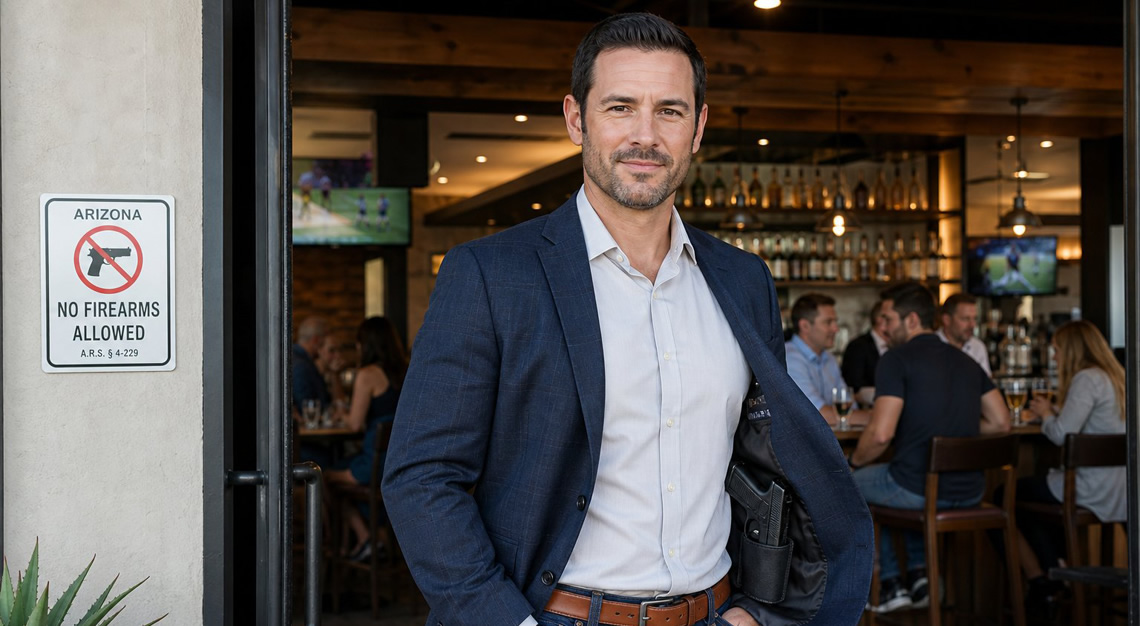
Are Firearms Allowed in Arizona Bars and Restaurants That Serve Alcohol? Understanding State Laws and Restrictions
Key Takeaways
Arizona restricts firearms in bars and restaurants that serve alcohol through specific statutes, despite the state's generally permissive gun laws. Understanding these rules is critical to avoid criminal penalties.
You cannot carry a firearm into these establishments if you plan to drink alcohol. This prohibition applies regardless of whether you have a permit or how you carry the weapon.
Posted "no guns" signs carry legal weight in Arizona. If a bar or restaurant displays proper signage prohibiting firearms, you must comply. Entering with a gun violates the law even if you hold a valid permit.
Concealed carry permit holders may have limited exceptions in certain restaurants without prohibition signs, but only if they do not consume alcohol. Open carry rules differ from concealed carry requirements.
Violating these laws can result in criminal charges, including Class 1 misdemeanor charges for carrying without a permit or more serious misconduct involving weapons charges depending on the circumstances.
Your specific situation matters. The legality of carrying in any establishment depends on multiple factors:
- Type of venue (bar versus restaurant)
- Presence of prohibition signage
- Your permit status
- Whether you consume alcohol
- How you carry (concealed versus open)
Review your circumstances carefully before entering any alcohol-serving establishment with a firearm.
Arizona's Gun-Friendly Laws vs. Alcohol-Serving Establishments

Arizona stands out as a state with strong protections for gun owners. Since 2010, the state has allowed constitutional carry for most adults 21 and older. This means you can carry a concealed firearm without obtaining a permit.
Open carry is also legal for eligible adults throughout Arizona. The state recognizes concealed carry permits from more than 30 other states. Arizona Department of Public Safety records show about 1.2 million active CCW permits across the state.
Arizona gun laws give residents substantial freedom when it comes to bearing arms. But this freedom has limits when you enter businesses that serve alcohol.
When you visit bars and restaurants with liquor licenses, different rules apply. You might think your right to carry extends everywhere, but Arizona treats alcohol-serving locations differently. The state balances your Second Amendment rights with public safety concerns in places where people drink.
Two main statutes control firearms in these establishments:
- ARS § 4-229 - Governs signage requirements and prohibition authority for liquor-licensed businesses
- ARS § 13-3102 - Covers misconduct involving weapons
These laws create a framework that many gun owners misunderstand. You cannot simply walk into any bar or restaurant with your firearm and assume you are following the law.
The regulations do not aim to eliminate your ability to protect yourself. They exist to maintain safety in environments where alcohol consumption occurs. Whether you plan to visit a sports bar in Phoenix, dine at a restaurant in Scottsdale with a liquor license, or attend a family event at a Tempe venue that serves drinks, you need to know the specific requirements.
Your carry method matters. Whether you consumed alcohol matters. Whether the business posted proper signage matters. Each detail affects your legal standing if you carry a firearm into an establishment that serves alcohol.
Understanding these distinctions keeps you compliant with state law while exercising your rights as a gun owner.
Arizona Law on Firearms in Bars and Restaurants that Serve Alcohol
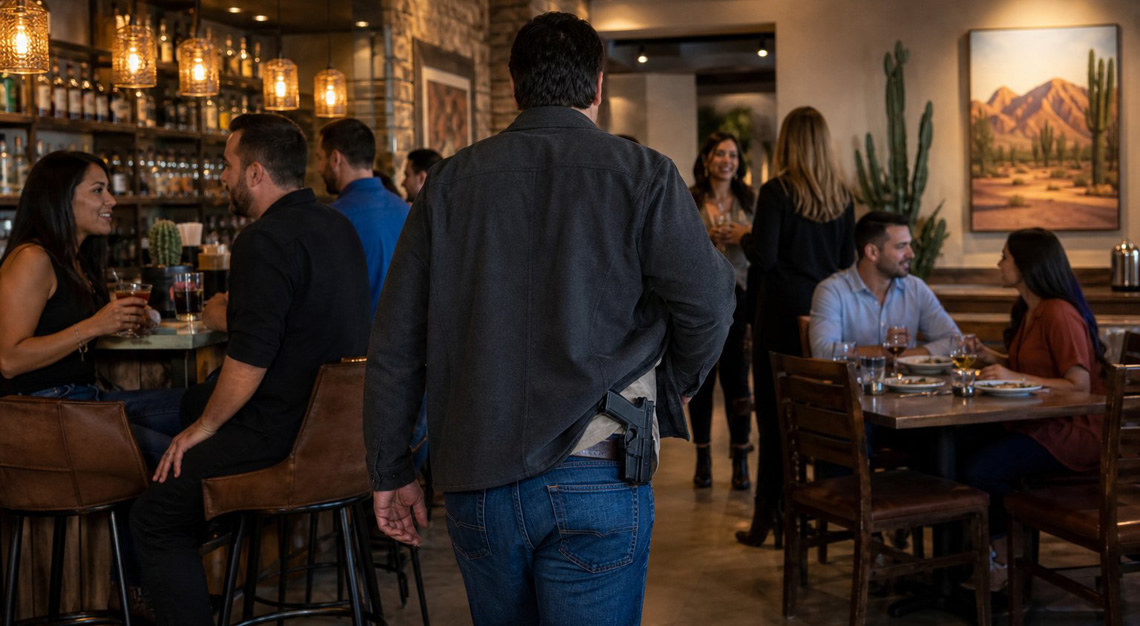
What ARS § 4-229 Says About Carrying Firearms
Arizona law gives businesses that sell alcohol for on-site drinking the power to ban guns from their property. This includes bars with Series 6 licenses, beer and wine bars with Series 7 licenses, and restaurants with Series 12 licenses issued by the Arizona Department of Liquor Licenses and Control.
When one of these businesses posts "no firearms" signs at every public entrance where customers can see them, you break the law by entering with a weapon. These signs are not suggestions. If you ignore them and walk in armed, you face potential criminal charges. The law does not care if you missed the sign or thought it did not apply to you.
What ARS § 13-3102 Says About Weapon Violations
ARS § 13-3102 makes it illegal to have a gun in certain places under specific conditions. This statute deals with misconduct involving weapons.
You can violate this law at alcohol-serving locations when you:
- Walk into a bar or restaurant that has proper "no firearms" signs posted
- Drink alcohol while carrying your firearm on the property
- Stay after the owner or staff tells you to leave
These violations can lead to criminal prosecution. The law treats these offenses seriously, regardless of whether you hold a concealed carry permit.
Important Definitions You Need to Know
|
Term |
Meaning |
|---|---|
|
On-sale retailer |
A business with a license to sell alcohol that customers drink on location |
|
Licensed premises |
The indoor and outdoor areas that fall under the establishment's alcohol license |
|
Posted premises |
A property with valid "no firearms" signs displayed at entrances the public uses |
|
Spirituous liquor |
Any drink with 0.5% or more alcohol content by volume under ARS § 4-101 |
A coffee shop without an alcohol license does not restrict your ability to carry firearms beyond basic property rights. A Phoenix bar holding a Series 6 license operates under different rules. The posted signs matter, and whether you consume alcohol matters. Both factors determine if you stay within the law.
Carrying Firearms into Arizona Bars and Restaurants

Understanding Posted Prohibition Signs
When you see a "no firearms" sign at the entrance of a bar or restaurant that holds a liquor license, the law is clear. You cannot bring a gun inside. This rule applies to everyone.
It does not matter if you have a concealed carry permit. It does not matter if you plan to open carry or conceal your weapon. The posted sign creates a legal barrier that you cannot cross while armed.
These signs must be posted at all public entrances to be valid. If you enter anyway, you break the law.
Locations Without Posted Signs
When no prohibition sign is displayed, the rules become more specific. You may be allowed to carry concealed if you hold a valid Arizona concealed carry permit and you do not drink any alcohol.
You should be ready to show your permit to law enforcement if asked. Open carry in these places faces more restrictions under Arizona law.
If you choose to enter, concealed carry with a valid permit is your safest option. Breaking these rules can result in misdemeanor charges, fines, and loss of your concealed carry permit.
Does the Type of Establishment Make a Difference?
The law looks at two things: the liquor license and the signage. The name or type of business does not change the rules.
A sports bar and a family steakhouse can both serve alcohol under a liquor license. Both must follow the same posting rules. Both fall under the same legal restrictions for firearms.
What matters is whether the location holds a liquor license and whether they have posted signs banning guns.
Common Situations Explained
Here is how the law applies in real situations:
- Entering a bar with clear "no guns" signs while armed: You violate the law. This can lead to weapons misconduct charges.
- Walking into a family restaurant with a liquor license but no signs, carrying concealed with a valid permit, and staying sober: This may be legal. You cannot drink alcohol and must leave if the staff asks you to.
- Going into any restaurant that posted prohibition signs, even with your permit: You break the law. Your permit does not let you ignore posted restrictions.
Rules About Signs, Carry Methods, and Drinking
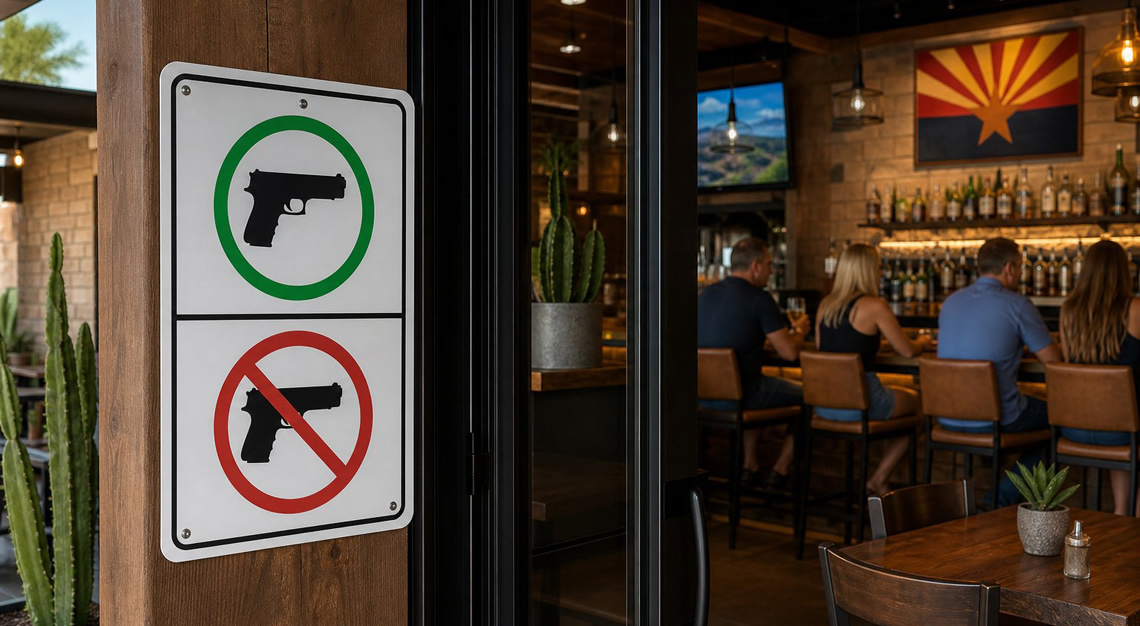
How Posted Signs Work Under State Law
A "no firearms" sign must meet specific legal standards to be enforceable. The sign needs to be easy to see and placed at every public entrance to the building. The wording must clearly tell people that firearms are not allowed inside.
When a business posts these signs correctly, they become legally binding. You cannot ignore them and claim you didn't know. A properly posted sign creates a real legal barrier to carrying your firearm on that property.
Carrying Openly Versus Concealed
Arizona law treats open carry and concealed carry differently in places that serve alcohol. In many situations where firearms are permitted, you must keep your weapon concealed rather than visible.
Open carry in a bar or restaurant can create problems even when it's technically legal. Visible firearms often make other customers uncomfortable and can lead to police calls. Concealed carry is generally the safer legal choice in these settings.
Key differences:
- Concealed carry permit holders have more access to alcohol-serving venues
- Open carry may be restricted even where concealed carry is allowed
- Visible firearms attract more attention from staff and law enforcement
Rules About Drinking While Armed
You cannot drink alcohol while carrying a firearm in most alcohol-serving establishments. This rule applies even if you have a valid permit and the business has not posted any signs.
Some people think one drink is acceptable. It is not. Any alcohol consumption while armed creates serious legal problems. Different states handle this differently, but Arizona takes a strict approach.
The State v. Lopez case from 2018 shows what happens when you break this rule. The court upheld a conviction for a permit holder who carried in a bar with a blood alcohol level of 0.15%. Even lower levels of intoxication can result in criminal charges.
|
Situation |
Legal Status |
|---|---|
|
Carrying with valid permit, no drinking |
Generally legal unless posted |
|
Carrying with valid permit, one drink |
Illegal |
|
Carrying while intoxicated |
Serious criminal offense |
What Happens If Asked to Leave
When staff asks you to remove your firearm or leave the property, you must comply right away. Refusing to leave turns a simple request into a trespassing violation.
Do not argue about your rights at that moment. Do not ask to speak to a manager if the manager already made the request. Leave immediately and take your firearm with you.
You can talk to a lawyer later if you think the business violated your rights. But staying on the property after being asked to leave creates new criminal charges that are much harder to defend.
Criminal Penalties for Weapon Offenses in Bars and Restaurants
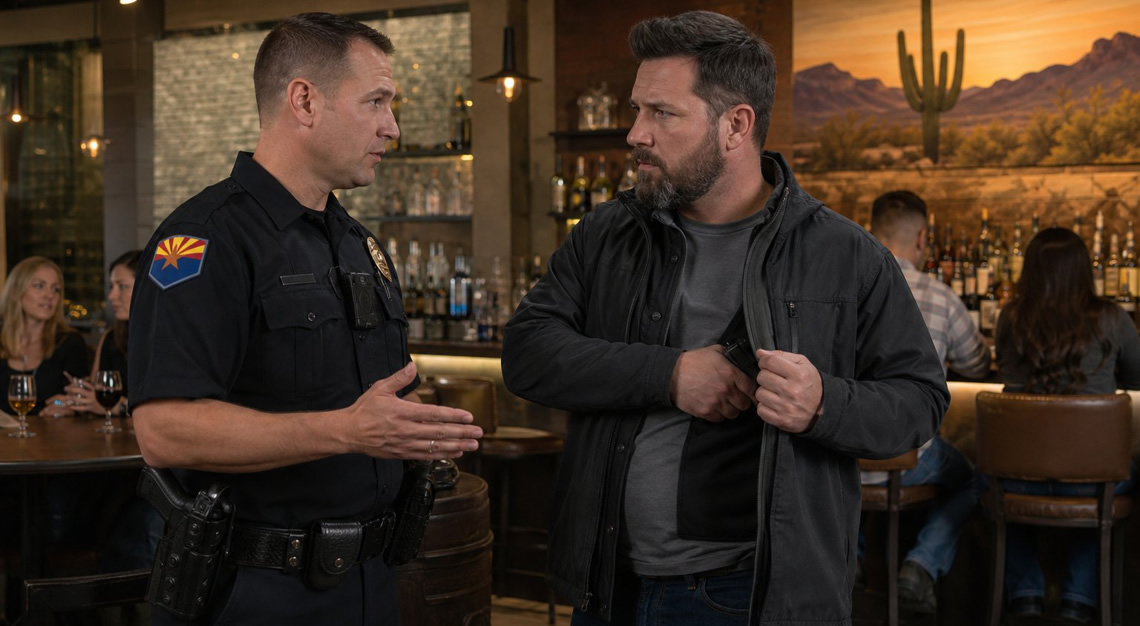
Charges and Sentencing
When you carry a firearm in a prohibited location like a posted bar or restaurant, or when you drink while armed in these places, you face a Class 1 misdemeanor charge under Arizona law. This offense carries serious consequences that can disrupt your life.
The penalties you may face include:
|
Penalty Type |
Possible Outcome |
|---|---|
|
Incarceration |
Up to 6 months |
|
Financial penalties |
Up to $2,500 |
|
Supervised release |
Varies by case |
|
Permanent record |
Yes |
Your case can become more severe if certain factors are present. Prior criminal history, resistance during arrest, or additional violations can elevate your charges to felony level. This increases both your potential jail time and the long-term impact on your life.
Additional Life Impacts
A weapons misconduct conviction creates problems that extend beyond your immediate punishment. You will likely experience:
- Gun ownership restrictions: Your ability to buy or keep firearms may be limited or eliminated
- Career limitations: Jobs in security, police work, and many licensed professions become unavailable
- License revocations: Professional certifications may be suspended or permanently denied
- Immigration complications: If you are not a U.S. citizen, you could face removal proceedings or entry denials
Real-World Scenario
Consider a Mesa resident who walks into a bar that has posted signs prohibiting firearms. An employee spots the concealed weapon and asks the person to leave. The individual refuses and begins arguing about constitutional rights. Staff calls police, who arrive and make an arrest. Now this person faces weapons misconduct charges along with possible trespassing and disorderly conduct violations. A simple error in judgment has escalated into multiple criminal charges requiring court appearances and legal representation.
What to Do If You Are Stopped, Detained, or Charged

Stay Composed and Respectful
Trying to argue about the law with officers at the scene will not help your case. It might make things worse for you.
You need to stay calm and show respect when talking to law enforcement. You have the right to stay silent. Use this right and only give basic information like your name and ID.
Do not make statements that could hurt your case later. Anything you say can be used against you in court.
Decline Permission for Searches
You do not have to let officers search you or your belongings. You can politely say no if they ask to search.
However, you must follow lawful commands. If an officer tells you to put your gun away, leave the building, or disarm safely, you need to do what they say.
Refusing a search is your legal right. Following lawful orders is your legal obligation.
Contact an Attorney Immediately
If you get arrested or receive a citation, call a lawyer right away. Find one who knows Arizona gun laws and cases involving alcohol-licensed locations.
Do not talk to police or prosecutors without your attorney present. These cases depend on small technical details that only an experienced lawyer can review properly.
You may need to file legal papers or motions quickly to protect your rights. A lawyer will know what needs to be done and when.
Keep Important Evidence
Save anything that might support your defense:
- Photos of the entrance showing signs or no signs
- Receipts that prove where you sat or what you bought
- Witness names and phone numbers of people who saw what happened
- Written rules from the bar or restaurant if available
Your Situation is Unique
Small details change the legal outcome. Was there a sign posted? Did you have your gun concealed? Did you drink any alcohol?
What worked for another person may not work for you. Never assume you know how your case will turn out. Get a qualified attorney to review your specific facts.
Common Questions About Firearms and Alcohol-Serving Establishments
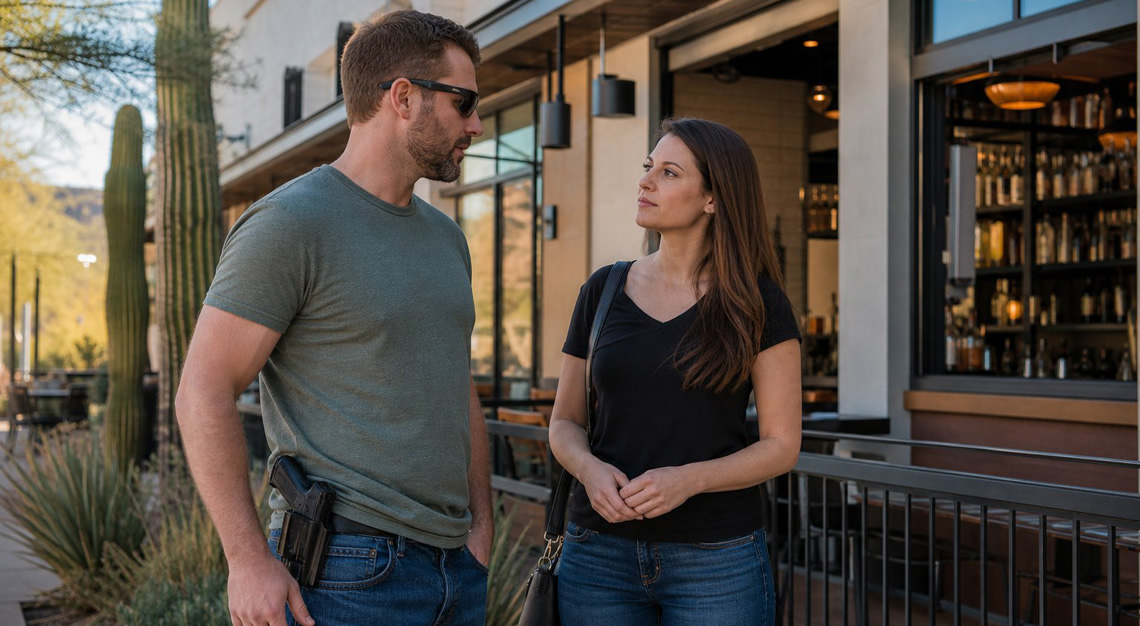
Can You Bring a Firearm Into Arizona Restaurants That Serve Alcohol While Staying Sober?
Arizona permits concealed carry permit holders to bring concealed firearms into certain restaurants that serve alcohol, provided specific conditions are met. You must have a valid permit and the establishment must not display signage prohibiting weapons.
Consuming any alcohol while carrying creates serious legal problems. You must remain completely sober.
Open carry in these locations poses additional risks even if you stay sober. The legal protections apply specifically to concealed carry by permit holders. Each restaurant operates under different policies, so you need to check for posted signs before entering. The rules apply narrowly and carry strict requirements.
Legal advice specific to your situation provides the best protection before you rely on this narrow exception.
Do Off-Duty Police Officers and Security Personnel Have Different Permissions in Bars?
Law enforcement officers may carry firearms in locations where alcohol is served under specific statutory exceptions. These exceptions typically apply to peace officers and certain officials performing their duties.
Private citizens do not receive these same exceptions. Off-duty private security guards generally fall under the same restrictions as other civilians unless a specific statute or employment contract states otherwise.
Key differences:
- Peace officers often have statutory authority
- Private security typically lacks special exemptions
- Employment contracts may provide limited permissions
- Agency policies dictate specific allowances
You should review both your employer's policies and state law if you work in law enforcement or private security. Consulting an attorney helps clarify exactly what permissions apply to your professional role.
How Do Special Event or Temporary Liquor Licenses Affect Firearm Restrictions?
Special events with temporary liquor licenses follow the same legal framework as permanent establishments. Festivals, concerts, street fairs, and temporary beer gardens all operate under liquor licensing laws when alcohol sales occur.
Event organizers can prohibit firearms and post appropriate notices. Entering these events while armed against posted rules creates criminal liability just as it would at a permanent bar.
You need to look for posted signage at any special event serving alcohol. Security personnel may provide additional instructions about prohibited items. Violations can result in removal from the event and potential arrest.
The temporary nature of the license does not reduce the legal restrictions. Treat these events with the same caution you would apply to any licensed establishment.
Do Hotels, Patios, and Connected Areas Have Separate Rules?
Licensed premises often include multiple connected spaces under one liquor license. The entire area falls under the same restrictions.
A restaurant's liquor license may cover:
- Indoor dining areas
- Outdoor patios and terraces
- Bar sections
- Waiting areas
- Adjoining spaces
Hotels present complex situations. The bar or restaurant area operates under liquor licensing rules while lobbies and guest rooms may not. The boundaries between these areas are not always clear.
Mixed-use properties require careful attention to signage and physical boundaries. When you regularly visit hotels or complex venues while carrying, legal consultation helps you understand how restrictions apply to specific layouts.
Can You Walk Through Bar Areas to Access Other Sections?
Simply passing through a posted bar area while armed can create legal problems. Physical presence in a restricted licensed area constitutes possession in that location regardless of your intent or how briefly you remain.
The law focuses on whether you possessed a firearm in a prohibited space. Your purpose for being there does not eliminate potential criminal liability.
You might walk through a bar to reach:
- Restaurant seating
- Restrooms
- Building exits
- Non-alcohol sections
None of these reasons protect you from charges if the area displays prohibition signage. You should avoid passing through clearly posted bar areas while carrying whenever possible. When specific layouts create recurring situations, legal guidance helps you understand your risks and options.
How Arizona Criminal Lawyer's Criminal Defense Team Can Help

Arizona Criminal Lawyer Attorneys at Law has deep experience with gun-related charges and cases involving firearms in places that serve alcohol. The firm serves clients throughout Arizona, including Phoenix, Mesa, and Scottsdale.
The attorneys handle:
- Weapons charges related to carrying in bars or restaurants
- Cases involving violations at liquor-licensed locations
- Defense strategies based on Arizona carry laws
- Negotiations with prosecutors for charge reductions or dismissals
- Representation at arraignments, hearings, and trials
The team also works with gun owners who have not faced charges but want legal guidance. If you need to understand the rules for carrying firearms in establishments that serve alcohol, the attorneys can explain your rights and responsibilities.
Contact Arizona Criminal Lawyer's criminal defense team at (602) 610-5019 for a confidential consultation. Whether you have been questioned, cited, arrested, or simply have questions about Arizona gun laws, the firm can provide the legal support you need.


