
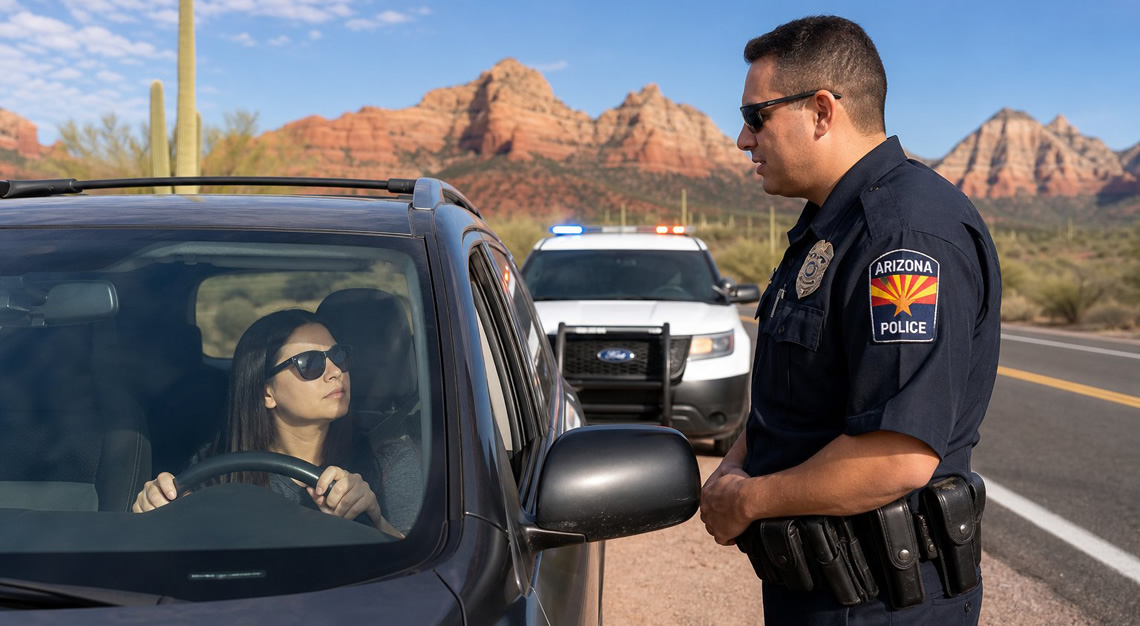
Can Police Take My Gun During a Traffic Stop or Investigation in Arizona? Your Legal Rights Explained
Carrying a firearm in Arizona is legal under both the state's constitutional carry law and with a concealed carry permit. But many gun owners have questions about what happens when they get pulled over during a traffic stop. You might wonder if police can take your gun, whether you need to tell the officer you're armed, or what happens if they don't give it back right away.
The answers depend on Arizona state laws, constitutional protections, and how officers handle these situations in practice. This article explains when law enforcement can temporarily take your firearm during a traffic stop, what your legal rights are, and what you should do if your weapon gets seized.
What You Need to Know
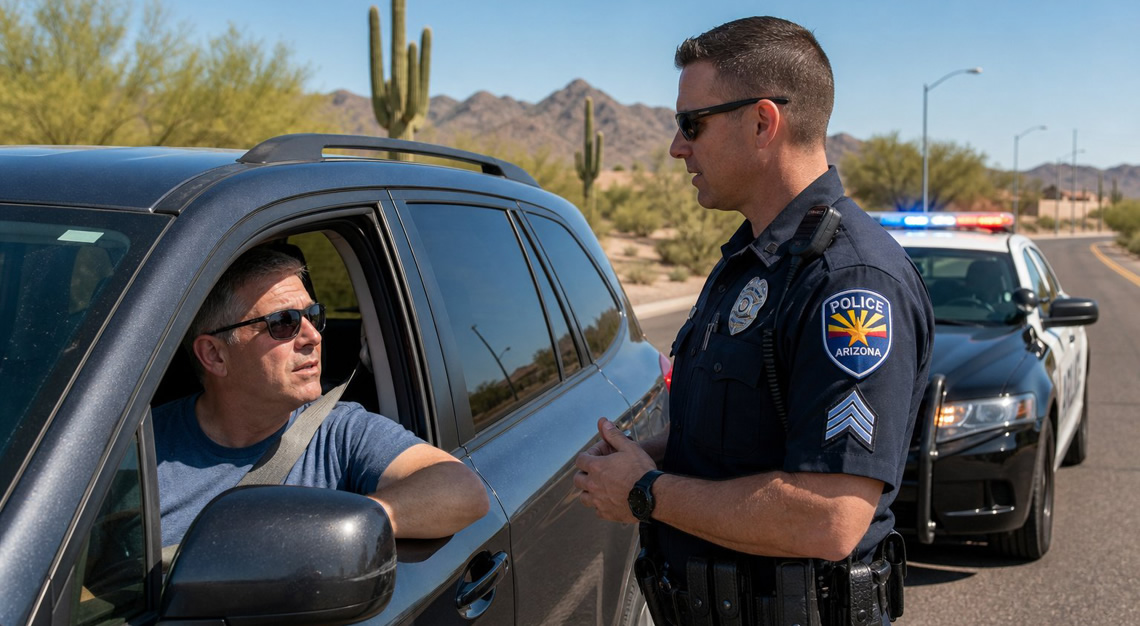
Police in Arizona can temporarily take your gun during a traffic stop if they believe it's needed for their safety. This applies under A.R.S. § 13-3102. Officers must give it back when the stop ends if they don't find evidence of a crime.
Who can be disarmed:
- Drivers carrying firearms
- Passengers with guns
- People with CCW permits
- Those carrying under constitutional carry laws
A safety check is not the same as an investigative hold. During a safety check, officers briefly secure your weapon. An investigative hold means your gun gets booked into evidence while police look into possible crimes, warrants, or legal restrictions.
Officers may keep your firearm if:
- They find evidence of criminal activity
- The gun is reported stolen
- You are prohibited from owning firearms under state or federal law
You should contact an Arizona criminal defense attorney if police seized your gun and won't return it. Legal help can protect your rights and help you get your property back.
Arizona Law on Firearms and Traffic Stops
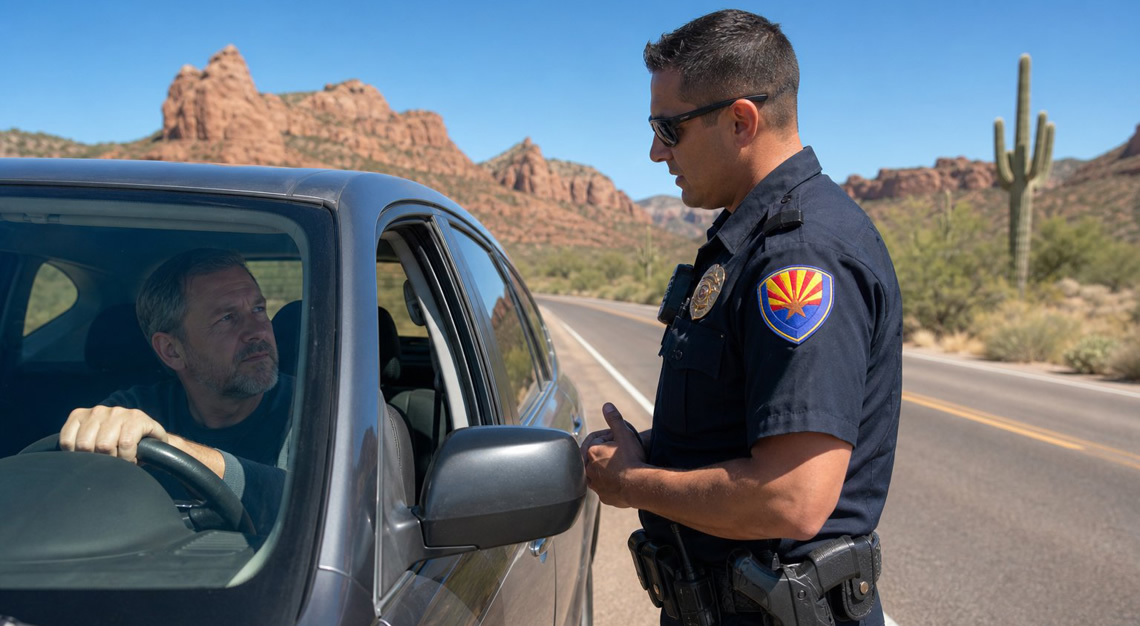
Arizona operates under constitutional carry laws that allow most adults to carry firearms without permits. Adults who are 21 or older can carry concealed handguns if they are not classified as prohibited possessors. People between 18 and 20 may carry under specific conditions.
When you encounter law enforcement during a traffic stop, specific rules govern how officers can handle your firearm. A.R.S. § 13-3102 gives police the authority to take temporary possession of your gun during any lawful stop. Officers can do this if they reasonably believe it protects their safety or the safety of others.
This temporary possession authority applies to:
- Routine traffic stops for speeding or equipment violations
- Stops for expired registration or license issues
- Investigative detentions for suspicious activity
- DUI investigations
- Domestic disturbance calls
- Other law enforcement encounters
The officer makes this decision based on their judgment about safety at the scene. You should expect that police may choose to secure your firearm while they conduct their business.
At the end of your Arizona traffic stop, the officer must return your gun if you are not arrested. The only exceptions occur when legal reasons exist to keep the weapon. These reasons include situations where the firearm serves as evidence of a crime, qualifies as contraband, or when you fall under the prohibited possessor category defined in A.R.S. § 13-3101.
If the officer suspects criminal activity has occurred, they may retain your firearm as part of their investigation. This retention extends beyond the traffic stop itself. Courts have recognized that asking about weapons in your vehicle falls within the scope of officer safety during traffic stops. This means police can legally inquire about firearms without it being considered an unreasonable question during the encounter.
Your cooperation during these stops helps ensure the process moves smoothly and your property gets returned promptly.
When Can Arizona Police Take Your Firearm During a Traffic Stop?

Police in Arizona can temporarily take your gun during a traffic stop under specific conditions. The law balances your right to carry with officer safety concerns during roadside encounters.
The Traffic Stop Must Be Legal
An officer needs a valid reason to pull you over before they can take any action related to your firearm. They cannot stop you based on a guess or feeling.
Valid reasons for a traffic stop include:
- Driving over the speed limit
- Failing to stop at a red light or stop sign
- Having an expired license plate
- Broken taillight or other equipment problems
If the stop itself is not legal, you may be able to challenge the officer's decision to take your gun in court.
Safety Concerns Justify Temporary Disarmament
The main legal standard focuses on whether the officer had reasonable concerns about their safety. Courts have ruled that officers can temporarily secure a weapon when they believe someone is armed and could present a risk.
The U.S. Supreme Court established key rules that apply in Arizona. Officers can ask if you have weapons in your vehicle. They can also order you or your passengers to step out of the car, as established in Pennsylvania v. Mimms. During the stop, they may take your gun, unload it, and keep it in their patrol vehicle.
The firearm must be returned to you when the stop ends. Officers cannot keep your gun longer than necessary to complete the traffic stop.
Typical Situations in Arizona
|
Situation |
What Officers Usually Do |
|---|---|
|
You tell the officer you have a concealed weapon |
Officer asks where it is located and may tell you not to touch it or may take it temporarily |
|
Officer sees a gun in a holster on your belt |
Officer may ask you to step out and will likely secure the weapon during the stop |
|
Officer spots a rifle case in your back seat |
Officer may ask about it and secure it if they have safety concerns |
|
Loaded gun sits on your passenger seat in plain view |
Officer will almost always secure this weapon right away |
|
Officer finds a second gun during a pat-down |
Officer will take control of the weapon and may ask you questions about it |
Officers can ask brief questions about firearms as part of the stop. These questions should not extend the stop beyond its original purpose, such as writing a speeding ticket.
What Does an Investigative Firearm Hold Mean in Arizona?

The Process
When police place your gun on an investigative firearm hold, they keep it after your traffic stop or police encounter ends. This is not the same as when an officer briefly takes your gun for safety during a stop.
The hold means your firearm stays with law enforcement while they check if the gun or you are linked to a crime. You give up temporary possession so officers can finish their investigation.
During the hold, your firearm goes through specific steps:
- Police log it into their evidence or property system
- Staff store it in a locked property room
- Officers run background checks and trace the serial number
- The department keeps it secure until the investigation closes
Most agencies like Phoenix PD or Maricopa County Sheriff's Office follow similar procedures. They document everything to maintain a clear record.
Why Police May Hold Your Firearm
Different situations can trigger an investigative hold on your gun:
|
Reason |
What This Means |
|---|---|
|
Stolen gun database match |
The serial number shows up as possibly stolen in NCIC |
|
Active investigation involving you |
Your firearm might be evidence in a criminal case |
|
Unclear ownership |
No one can prove who legally owns the gun |
|
Prohibited possessor concerns |
Questions about your felony record or restraining orders |
Police need reasonable suspicion that something criminal is happening before they can justify holding your firearm. They cannot simply take your gun without a valid legal reason.
When Traffic Stops Lead to Holds
Here is how a normal traffic stop can turn into an investigative hold.
An officer pulls you over and asks about weapons. You tell them you have a gun. The officer removes it from your vehicle for safety while writing your ticket.
The officer checks the serial number through police databases. The system shows a possible stolen gun report from another state. You might be the legal owner, but now the officer has reasonable suspicion to investigate further.
Your gun gets placed on hold while police verify the report. You leave without your firearm that day.
These holds can last days or even months. The time depends on how complicated the investigation becomes. You may need to file written requests or legal motions to get your gun back. An Arizona criminal defense lawyer can help you through this process.
When Police Hold Your Gun: Safety Step or Legal Seizure?
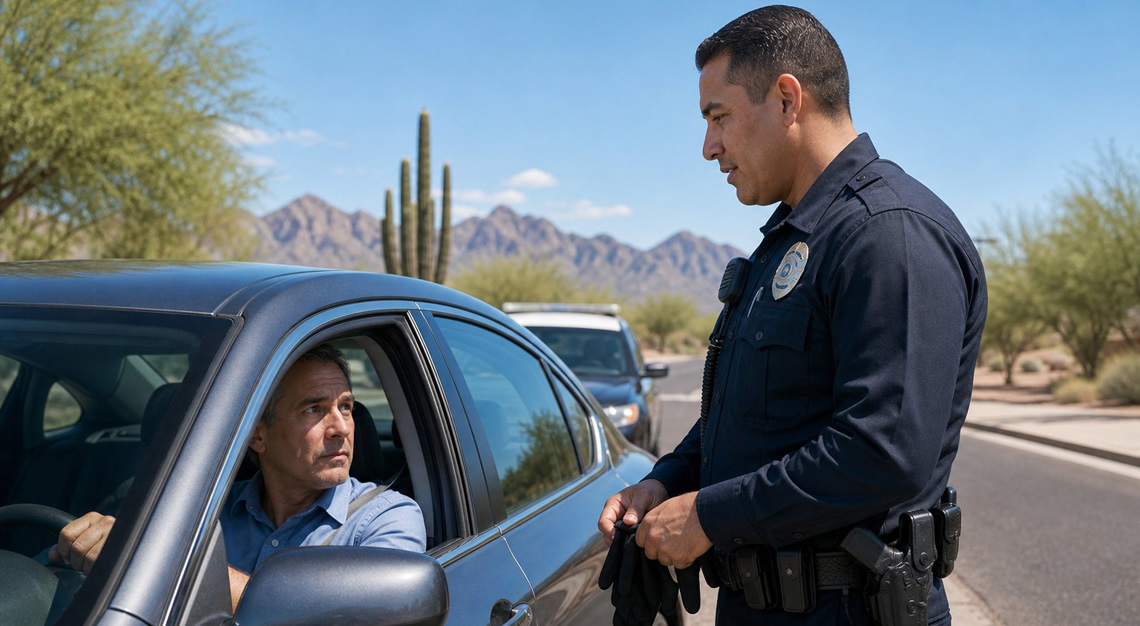
Holding Your Gun During the Stop
Officers can take your firearm temporarily while they conduct a traffic stop or investigation. This type of hold lasts only as long as the stop itself. The gun stays with the officer while you interact with law enforcement.
You get your weapon back when the encounter ends. Officers usually unload it before returning it to you. This action does not require probable cause because it functions as a safety measure rather than a criminal investigation tool.
The law views this as different from keeping your gun permanently. No crime needs to be present for temporary holding. Your Fourth Amendment rights still apply, but the temporary nature changes how courts view the action.
Taking Your Gun as Evidence
A formal seizure works differently from a temporary hold. Officers tag your firearm and log it into evidence storage. The weapon becomes part of a criminal case.
This happens when:
- Police need the gun to support criminal charges
- The weapon relates to offenses like weapons misconduct or DUI
- Evidence suggests illegal possession or use
Probable cause must exist to justify keeping your gun this way. The Fourth Amendment requires reasonable grounds to seize property as evidence. Simply owning a gun legally does not give officers grounds to take it permanently.
Your Rights Against Unreasonable Seizure
The Fourth Amendment protects you from unreasonable searches and seizures. Officers need valid legal reasons to convert a safety hold into permanent seizure. Courts require either reasonable suspicion or probable cause for this change.
Your lawful possession alone does not justify keeping your firearm. Officers cannot extend a traffic stop unreasonably just to search for gun violations. If police hold your weapon well beyond the stop's original purpose without cause, this may violate your Fourth Amendment rights.
Courts have found violations when officers held firearms for extended periods after completing the traffic stop's purpose.
Is There a Requirement to Notify Police You're Carrying in Arizona?
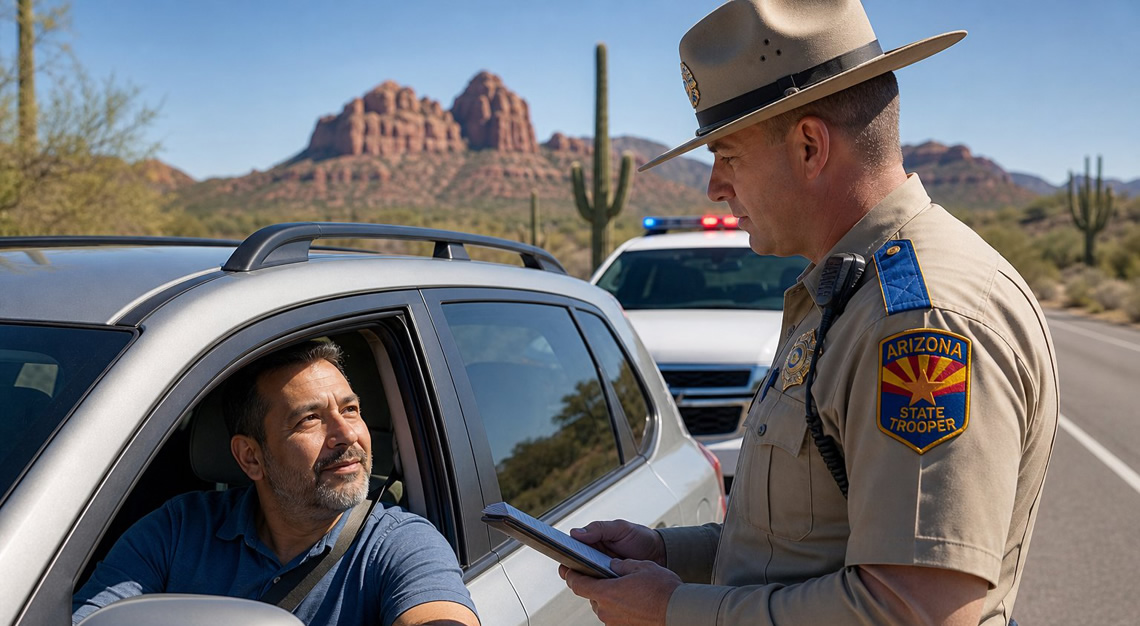
What the Law Says
Arizona does not require you to tell an officer you have a gun unless they ask you directly. You are not legally obligated to announce that you are carrying a firearm when an officer first approaches your vehicle.
If an officer asks whether you have a weapon, you must answer honestly. Lying about having a firearm can make the situation worse and may hurt your case if you face charges later. Being untruthful during a police stop can also lead to additional legal problems.
Trying to hide a gun after being asked about it will likely escalate the encounter. Officers take firearm-related questions seriously, and dishonest answers can damage your credibility.
What You Should Do During a Stop
Many concealed carry courses in Arizona recommend telling officers about your firearm early in the interaction. A simple statement works well:
"Officer, I want you to know I'm lawfully carrying a handgun. How would you like me to proceed?"
Follow these steps to keep the interaction safe:
- Keep both hands on the steering wheel where the officer can see them
- Don't reach for the gun, glove box, or any other area without permission
- Wait for the officer to give you clear instructions
- Tell the officer before you make any movements inside your car
Stay calm and speak respectfully. Each traffic stop is different, but honest communication and following lawful commands help reduce risk when you are armed.
Getting Your Firearm Back After a Traffic Stop in Arizona
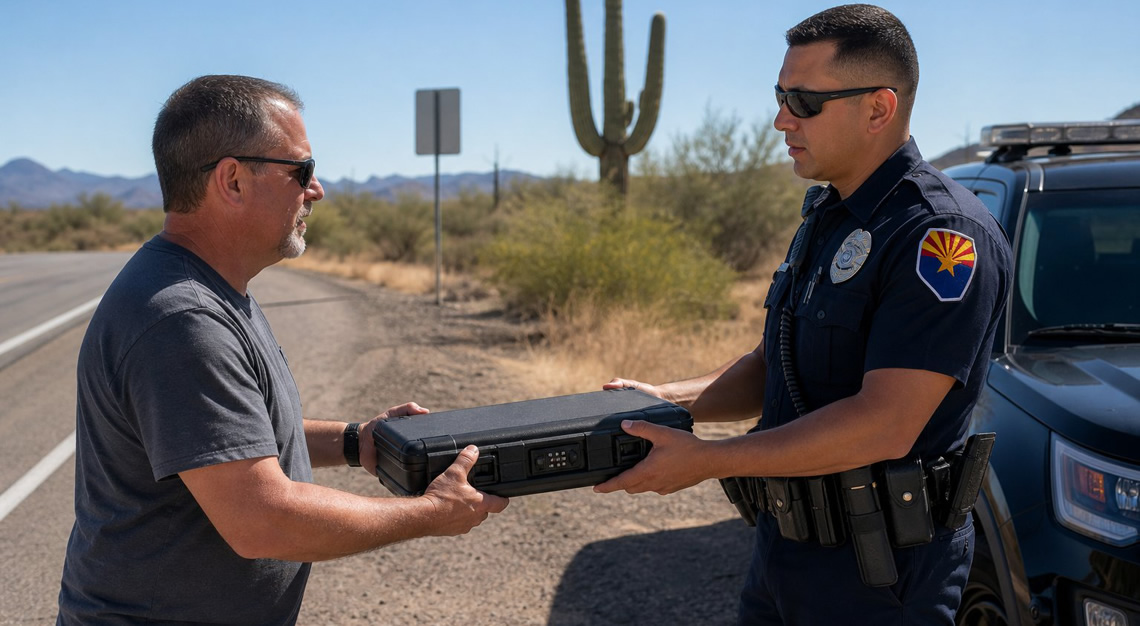
Getting Your Gun Back at the Scene
Police will usually return your firearm right there on the roadside if the traffic stop was routine. This happens when you were pulled over for something minor like speeding or a lane violation and no other problems came up. The officer will typically return the gun unloaded before you leave.
About 65% of firearms taken during traffic stops in Arizona are returned the same day. The officer hands the weapon back once they finish writing the ticket or giving the warning.
Picking Up Your Firearm From Storage
Your gun might end up in a police property room if officers placed it under investigation or took it as evidence. You will need to go through a retrieval process to get it back.
You should bring the following when picking up your firearm:
- Valid photo ID
- Proof you own the gun (receipt, registration papers, or similar documents)
- Evidence that you can legally possess firearms
The property room staff will check that you meet all legal requirements before releasing the weapon. This means you cannot have pending charges related to the gun and you must not be a prohibited possessor.
Reasons Police May Keep Your Gun
Active Criminal Case
The firearm stays in evidence storage if charges involve the weapon. Police hold it until the case concludes.
Court Orders
A protective order against you may ban firearm possession. Police cannot legally return the gun while the order remains active.
Legal Restrictions
Federal or state law might prohibit you from owning guns. Return would violate the law in these situations.
Stolen Property
The gun belongs to another person if records show it was reported stolen. Police return it to the rightful owner instead.
Steps to Take When Officers Confiscate Your Firearm in Arizona
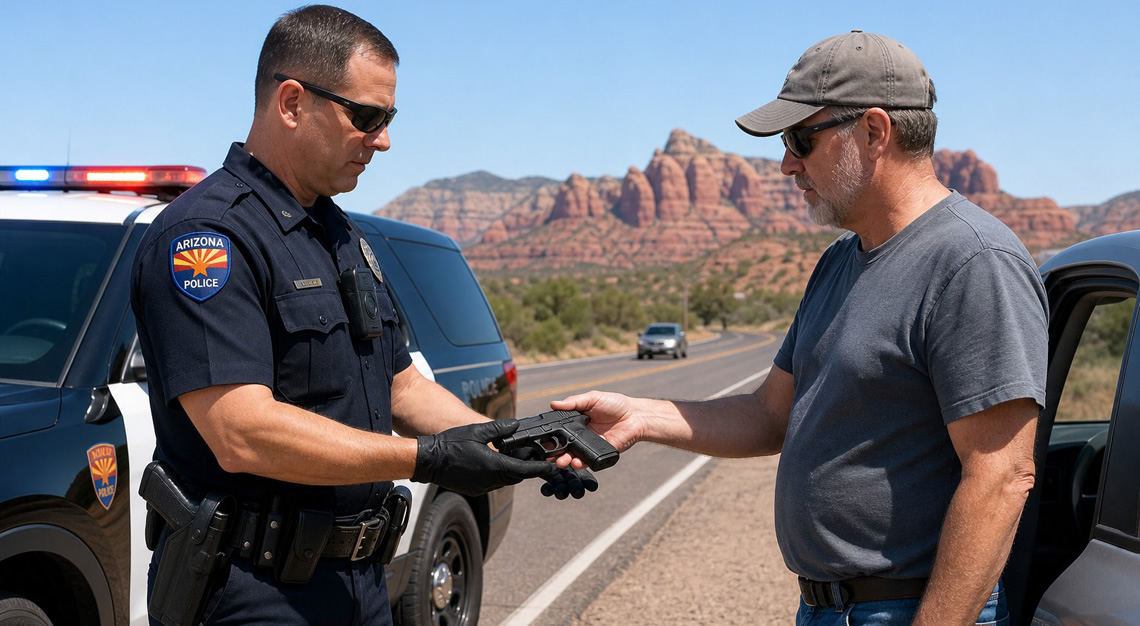
While Being Stopped
Stay calm and do not argue with the officer on the side of the road. Keep your hands where they can be seen at all times. Follow all lawful instructions about hand placement and movement.
Do not try to stop an officer from taking your gun. Fighting back can result in criminal charges even if the seizure was not legal. You can politely ask why your firearm is being confiscated and if you will get any paperwork about it.
Following the Traffic Stop
Write down important details as soon as you can. Record the date and time of the stop. Note the exact location, such as the street intersection or highway mile marker.
Key information to document:
- The agency that stopped you (city police, state troopers, etc.)
- Officer name or badge number
- Any case numbers or property receipts given to you
Request Information About Your Firearm
Call the law enforcement agency to learn the status of your gun. Ask specific questions about why it is being held. Find out if it is temporary or part of an investigation.
Ask what steps you need to take to get it back. Request information about required forms or waiting periods.
Get Legal Help
Contact a criminal defense attorney if you think your rights were violated. A lawyer can review what happened and explain your options. They can help you get your firearm returned or challenge an illegal seizure.
Common Questions About Guns and Traffic Stops

Can Officers Take a Passenger's Firearm During a Traffic Stop in Arizona?
Yes. Police can temporarily take a passenger's gun during a traffic stop in Arizona. The same legal rules apply to passengers as they do to drivers.
An officer must have a lawful reason to believe the firearm creates a safety concern during the stop. If the officer takes the gun, they should return it when the traffic stop ends, as long as no criminal activity is discovered.
Passengers should keep their hands where officers can see them. Answer questions about firearms honestly. Follow all lawful instructions the officer gives you.
Can Officers Check Your Gun's Serial Number During a Stop?
Officers commonly run serial numbers through databases when they take temporary possession of your firearm. They check systems like NCIC to see if the gun was reported stolen. Courts generally view this as a normal safety and investigative step.
The check should not add unreasonable time to your stop. If an officer starts taking your gun apart or removing grips to find a hidden serial number, this may cross legal boundaries. Any inspection that significantly extends your stop or becomes too invasive could be challenged with help from an attorney.
What Happens if You Are From Another State and Police Take Your Gun in Arizona?
Arizona law applies to everyone in the state, including visitors. Officers can temporarily take or seize your firearm using the same standards they apply to Arizona residents.
Getting your gun back from an Arizona agency while living elsewhere can be difficult. You will likely need to prove you own the firearm legally. You must also show you follow both Arizona's laws and your home state's laws.
An Arizona criminal defense attorney becomes especially important in these situations. They can help you navigate the process and recover your property.
Can You Record Your Traffic Stop if You Have a Gun in Your Car?
Arizona generally allows you to record police during traffic stops. You cannot interfere with the officer's work or ignore lawful commands.
Recording from a safe, steady position is usually acceptable. Do not make sudden movements to reach for your phone, especially after telling an officer you have a gun. Tell the officer what you are doing before you move your hands to avoid any dangerous misunderstandings.
What Should You Do if the Officer Does Not Give You a Receipt or Property Form for Your Gun?
Agencies normally create an incident number or property number when they keep your firearm beyond the stop. You can use this number later to request information about your gun.
If you receive no paperwork and cannot get clear answers from the agency, contact a criminal defense attorney right away. An attorney can help you locate your firearm and protect your legal rights.
When to Contact the Arizona Criminal Lawyer Criminal Defense Team

Gun laws and constitutional rights during police stops can get complicated quickly. If officers have taken your firearm for more than a brief safety check, you should talk to a lawyer.
The Arizona Criminal Lawyer defense team works throughout Maricopa County and knows the local courts and law enforcement agencies well. This experience helps when working to get your property back or questioning whether the seizure was legal.
You should reach out if:
- Your gun was taken during a traffic stop
- Police are holding your firearm beyond the stop
- You need help getting your property returned
- You have questions about your rights
Call (602) 610-5019 to set up a private meeting with an Arizona criminal defense attorney. Getting advice specific to your situation works better than reading general information online.


