

When Can I Legally Conceal Carry in Arizona? Age Requirements and Permit Laws Explained
Arizona allows people to carry concealed firearms more freely than most states. But even with these relaxed laws, there are still important rules you need to follow. If you carry a gun without knowing these rules, you could face criminal charges.
Understanding what counts as concealed carry and when you can legally do it matters whether you own guns already or just got your first one. Arizona's laws give you freedom, but they also set clear limits on where and how you can carry. Knowing these boundaries helps you stay legal and avoid trouble with law enforcement.
Key Takeaways

Arizona allows most adults 21 and older to carry a concealed handgun without obtaining a permit. This constitutional carry law applies if you are legally allowed to own a firearm.
A firearm qualifies as concealed when no part of the gun or holster can be seen by those around you. The weapon must be hidden from ordinary observation.
Important restrictions still apply:
- School grounds prohibit concealed carry
- Federal buildings do not allow weapons
- Private businesses can ban firearms with proper signage
- Certain alcohol-serving venues have restrictions
Violating concealed carry laws can lead to weapons misconduct charges. These range from misdemeanor offenses to serious felonies depending on the circumstances.
You can still obtain an optional concealed weapons permit. This permit offers benefits when traveling to other states and may expand where you can legally carry.
Courts decide whether a gun was truly concealed based on multiple factors. Your carrying method, visible portions, and location all play a role in these determinations.
Legal issues involving concealed carry require professional guidance. You should speak with an attorney if you face investigation or charges.
Arizona's Constitutional Carry Framework

Arizona gun laws changed on July 29, 2010, when the state adopted constitutional carry. Adults who are 21 or older can now carry a concealed handgun without getting a permit, license, or registration. You must be legally allowed to own firearms under state and federal law.
The main law that covers weapons offenses is A.R.S. § 13-3102. This statute explains who can legally possess firearms and how you can carry them. A.R.S. § 13-3101 provides important definitions, including what counts as a "deadly weapon" and who is considered a "prohibited possessor."
Arizona recognizes different types of carry:
- Open carry - Your firearm or holster is clearly visible to people around you. You can open carry at 18 years old if you are legally allowed to own a gun.
- Concealed carry - Your firearm is hidden from view. You must be 21 or older and legally permitted to possess firearms.
Constitutional carry does not eliminate federal restrictions or Arizona's specific prohibitions on certain locations. You still cannot carry in places where deadly weapons are banned by law.
Law enforcement interactions require specific actions from you. When you have contact with a police officer during their official duties, you must tell them if you are carrying a concealed firearm. The officer can temporarily take your weapon during the interaction. Not following these rules can lead to legal problems.
Arizona concealed carry under constitutional carry gives you freedom, but you must still follow all applicable laws. Federal restrictions continue to apply even though Arizona does not require a permit.
Who Is Allowed to Carry Concealed Firearms in Arizona?

Not everyone can legally carry a concealed weapon in Arizona. Your ability to do so depends on your age and criminal history.
To carry a concealed handgun without a permit, you must be at least 21 years old. You also need to be legally present in the United States. Most importantly, you cannot be what the law calls a prohibited possessor.
Several things can make you a prohibited possessor:
|
Category |
What It Means |
|---|---|
|
Felony record |
You have a felony conviction that has not been set aside or restored |
|
Criminal charges |
You currently face felony charges |
|
Domestic violence orders |
You are under certain protective orders related to domestic violence |
|
Mental health history |
A court found you mentally incompetent or you were involuntarily committed |
|
Federal restrictions |
You fall under federal prohibitions like a dishonorable military discharge |
If you are between 18 and 20 years old, different rules apply. You may legally possess and openly carry firearms in many places. However, you generally cannot carry concealed without getting a special permit first.
Your legal status can change quickly. Court orders or new criminal charges can make you prohibited from carrying firearms even if you were legal before. If you have any doubts about whether you can legally carry concealed, you should get legal advice before doing so.
What Does "Concealed" Mean Under Arizona Law?
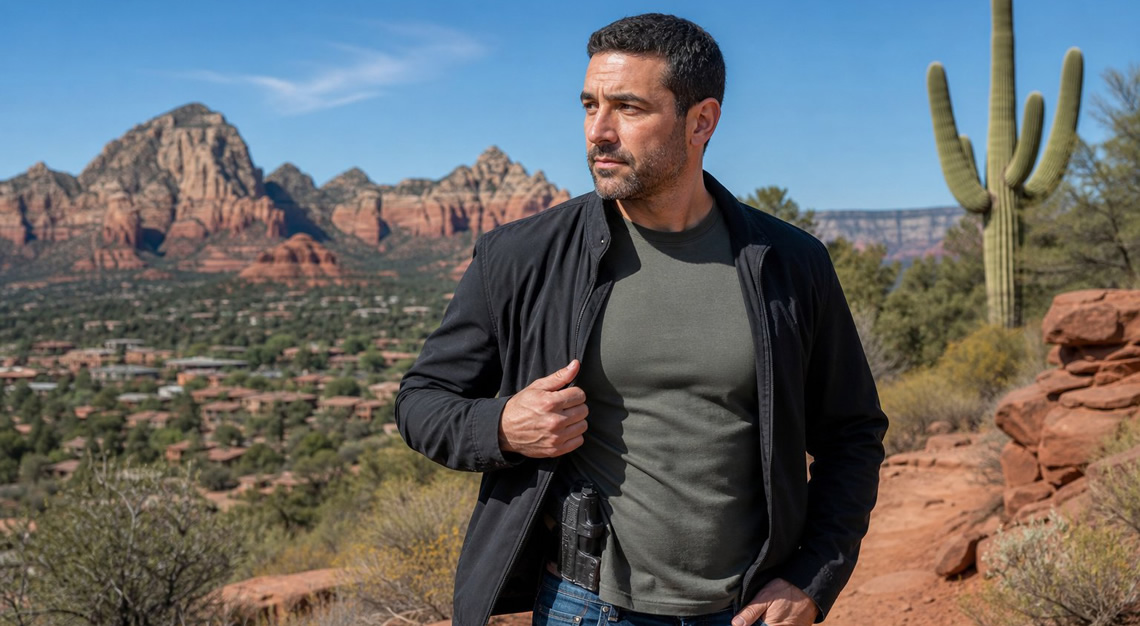
Arizona law does not spell out every detail of what counts as concealed. Courts use common sense to decide if a weapon is hidden from view. The basic question is whether an ordinary person could easily see and recognize the weapon.
A weapon is concealed when it is hidden from normal sight. This means the firearm is covered by clothing, tucked in a bag, or stored in a compartment where most people would not notice it without looking closely.
Seeing a small piece of your holster or gun grip does not always make it open carry. If most of the firearm stays hidden and the average person would not realize you are armed, it may still count as concealed.
Common concealed carry situations:
- Your handgun is completely covered by a shirt, jacket, or coat
- You carry a firearm in a purse, backpack, or briefcase
- You wear an ankle holster hidden under your pants
- Your handgun sits in a closed center console or glove box
Situations that likely do not count as concealed:
- Your handgun sits in a belt holster that anyone can see on your hip
- You carry a rifle on your shoulder where it is clearly visible
- Your firearm rests on your vehicle seat and can be seen from outside
Officers, prosecutors, and judges sometimes disagree about whether your weapon was actually concealed. This makes it a factual question that can be challenged in court. Borderline cases create problems because "concealed" depends on judgment. If you face questions about whether your carry method was legal, you should speak with a lawyer right away.
Where You Carry and How You Carry Determine If Your Weapon Is Hidden

Carrying on Your Body
The way you position a firearm on your body determines whether it counts as concealed. Holsters worn inside your waistband, shoulder holsters under jackets, ankle holsters, and guns in your pockets are concealed when clothing covers them. If your shirt, coat, or pants keep others from easily seeing your weapon, you are carrying it concealed.
The key factor is visibility. A firearm becomes concealed when your clothing or accessories block it from ordinary view.
Carrying in Bags and Purses
When you put a firearm in a bag, Arizona law treats it as concealed carry. This applies to purses, backpacks, briefcases, and fanny packs. The weapon does not need to be on your body to count as concealed.
Any bag that hides your firearm from view creates a concealed carry situation. This remains true whether you wear the bag or keep it within reach.
Carrying in Your Vehicle
You can carry a loaded handgun in your vehicle without a permit if you are legally allowed to own firearms. The gun can be in your glove box, center console, under the seat, or in door compartments. What matters is whether someone can see it.
A gun sitting on your seat that others can see through the window is open carry. A gun stored in a closed console or compartment is concealed carry.
|
Carry Location |
Concealed Status |
|---|---|
|
Closed glove box |
Concealed |
|
Closed center console |
Concealed |
|
Visible on passenger seat |
Open carry |
|
Under seat, out of view |
Concealed |
Small details can change how law enforcement views your carry method:
- Whether your jacket stays buttoned or falls open
- Whether your bag has clear or solid material
- Whether any part of the firearm shows to someone nearby
Choose a clear method of carry to avoid confusion. Situations where your gun is partially visible or your jacket shifts can lead to police questions and potential legal trouble.
Locations Where Concealed Carry Is Not Permitted

Even when you are legally allowed to carry a concealed weapon in Arizona, both state and federal laws restrict firearms in specific places. Breaking these rules can result in serious criminal charges.
Key Restricted Areas
Educational Facilities and Surrounding Zones
Arizona law prohibits weapons on K-12 school property. A limited exception allows concealed weapons permit holders to store unloaded firearms in locked vehicles during student pick-up and drop-off times.
The federal Gun-Free School Zone Act extends restrictions to areas within 1,000 feet of school property. This means you cannot carry a concealed weapon near schools even if you are not on school grounds.
Federal Property
You cannot carry concealed weapons in federal buildings. This includes post offices, federal courthouses, and airport areas beyond TSA security checkpoints.
State and Local Government Buildings
Weapons are typically banned in government buildings and courthouses unless you check them with security. Pay attention to local rules and posted signs, as these restrictions are enforced under Arizona law.
Private Property with Posted Restrictions
Property owners can prohibit firearms through signs or stated policies. If you ignore a clear "no weapons" notice, you can be asked to leave. Refusing to leave may lead to criminal trespass charges or other legal consequences.
Additional Prohibited Locations
|
Location Type |
Restriction Details |
|---|---|
|
Correctional facilities |
Complete weapons ban with severe penalties |
|
Secure mental health facilities |
Complete weapons ban with severe penalties |
|
Polling places |
No weapons allowed on election day |
|
Power stations |
Hydroelectric and nuclear facilities prohibit concealed carry |
Penalties and specific restrictions differ based on location and applicable laws. When you are unsure about carrying near schools, government property, or any questionable location, get legal advice before proceeding.
Special Rules for Concealed Carry Around Alcohol and Bars

Arizona has strict regulations when it comes to firearms and alcohol. You need to understand these rules to stay within the law.
Permit Status Matters
Whether you have a concealed weapons permit changes what you can legally do. People with permits have more options than those relying on permitless carry. You can carry into certain restaurants and bars if you have a permit, but only under specific conditions.
The Absolute Ban on Drinking While Armed
You cannot consume alcohol while carrying a firearm anywhere in Arizona. This rule applies under A.R.S. § 4-244(31) and is a Class 1 misdemeanor. The location does not matter—bars, restaurants, homes, or any other place. The ban starts the moment you begin drinking, not when you enter a place that serves alcohol.
Posted Signs Must Be Followed
Businesses can prohibit firearms by posting proper signage. You must comply with these signs even if you have a permit. Ignoring posted signs can lead to criminal charges.
License Types Change the Rules
Establishments with series 6 or series 7 liquor licenses face different restrictions. Bars with these licenses have tighter rules than regular restaurants. You should check what type of license a business holds before carrying there.
Key Requirements for Legal Carry
- You must have a valid permit to carry concealed in most alcohol-serving venues
- You cannot drink any alcohol while armed
- You must leave if a business has posted no-firearms signs
- You cannot be impaired in any way while carrying
Legal Risk Increases
Mixing guns and alcohol creates serious legal problems. Even if you follow all rules, any incident in a bar will face heavy scrutiny. Prosecutors look closely at cases involving firearms near alcohol.
Why Getting a CCW Permit Still Matters (and How It Helps You)

Advantages of Obtaining a CCW Permit
While Arizona allows adults 21 and older to carry concealed without a permit, getting an Arizona concealed weapons permit through the Arizona Department of Public Safety offers important benefits.
Traveling to Other States: When you have an Arizona CCW permit, many other states will recognize your right to carry concealed within their borders. You must follow each state's specific laws when traveling. Arizona honors all valid permits from other states, and numerous states extend the same courtesy to Arizona permit holders.
Access for Young Adults: If you are 19 or 20 years old, an Arizona concealed carry permit may allow you to carry concealed in situations where permitless carry does not apply.
More Places to Carry: CCW permit holders can carry in certain establishments that serve alcohol where those without permits cannot. Posted signs and rules about drinking alcohol still apply.
Faster Gun Purchases: Your concealed weapons permit may replace the instant federal background check when buying firearms. This depends on the dealer and current regulations.
How to Get Your Arizona CCW Permit
The Concealed Weapons Permit Unit at AZDPS handles all permit applications. You need to meet specific requirements to qualify.
Key Requirements:
- Be at least 21 years old (some exceptions exist for younger applicants)
- Show firearms competency through approved training courses, hunter safety programs, NRA instruction, or military service
- Complete the permit application and pay required fees
- Pass a background check conducted by the Arizona Department of Public Safety
- Permits remain valid for five years before renewal
If you have criminal history, pending charges, or questions about your eligibility, legal guidance can help you determine whether pursuing an Arizona concealed carry permit makes sense for your situation.
Penalties for Unlawful Concealed Carry in Arizona

Arizona welcomes gun ownership, but breaking concealed carry laws can still lead to serious criminal charges. You could face felony charges that affect your gun rights and criminal record for years to come.
What Charges You Might Face
The primary law you need to know is A.R.S. § 13-3102, which addresses misconduct involving weapons. This statute covers situations where prohibited individuals possess firearms, people carry guns in banned locations, and certain concealed carry violations occur.
Your charges can vary widely based on what happened. You might face a Class 1 misdemeanor in some cases. Other situations could result in Class 4 felonies or higher. These charges carry real consequences:
- Jail or prison time
- Financial fines
- Probation requirements
- Loss of your right to own firearms
A conviction creates problems beyond criminal penalties. You may struggle to find employment or keep professional licenses. Background checks will show your conviction. If you are not a U.S. citizen, you could face immigration consequences.
Self-defense claims might apply in your case. However, these defenses do not automatically excuse other violations. Being a prohibited possessor or carrying into a banned location remains illegal even if you claim self-defense.
Common Mistakes That Result in Charges
You can face arrest and prosecution even when you did not intend to break the law. Many people find themselves in legal trouble because they did not fully understand the rules.
You might accidentally carry your weapon into a posted bar or store without noticing the sign. Law enforcement may decide your partially visible gun counts as concealed carry. Government buildings sometimes have unclear weapon policies that confuse visitors.
Some people believe their expired permit still protects them legally. Others do not realize their past felony conviction or mental health history makes gun possession illegal for them.
Common Questions About Carrying a Concealed Firearm in Arizona

Do I need to inform a police officer that I'm armed during a traffic stop in Arizona?
Arizona does not have a law that requires you to automatically tell an officer you are carrying a gun. But you must answer truthfully if the officer asks you about weapons during a lawful stop.
Lying to an officer about whether you have a firearm can lead to criminal charges. Making quick movements toward your weapon can also create serious problems and put you at risk.
The best approach is to keep your hands visible and answer any questions about weapons honestly. You can tell the officer where the gun is located and ask how they want you to proceed.
Does keeping a gun in my glove box or console count as concealed in Arizona?
A gun in a closed glove box or center console is treated as concealed carry. You cannot see the gun from outside the vehicle because it is stored in an enclosed space.
This is legal in Arizona if you are 21 or older and allowed to own firearms. You do not need a permit to carry this way.
If the gun sits on your seat or in an open console where people can see it, that becomes open carry instead. Both methods can be legal depending on your age and where you are located.
Can a gun still be concealed if part of it shows?
A firearm can still count as concealed even when a small part of it is visible. Courts look at whether a regular person would recognize it as a gun without looking closely.
If only the grip or a piece of the holster shows but most people would not know it was a firearm, the law may still treat it as concealed. The focus is on whether the weapon is effectively hidden from view.
This creates confusion in some cases. What counts as concealed versus open carry can become a legal dispute when only part of the gun is visible.
Am I allowed to carry concealed on college campuses in Arizona?
Arizona law does not ban concealed carry on college campuses the same way it does for K-12 schools. However, colleges and universities can create their own rules that prohibit guns on campus property.
Breaking campus weapons policies can lead to serious consequences:
- Student discipline or expulsion
- Loss of employment
- Possible criminal trespass charges if campus police get involved
Check your school's specific policy before carrying on campus. Private and public schools both have authority to restrict firearms on their property.
What steps should I take if I face weapons charges related to concealed carry?
Do not give detailed statements to police without a lawyer present. Anything you say can be used against you in court.
Save any evidence that shows how you carried the weapon. This includes photos, videos, or witness names. Document where you were and what happened.
Important actions to take:
- Contact a criminal defense attorney experienced with Arizona gun laws immediately
- Let your lawyer review all charging documents
- Work with counsel to challenge whether the state can prove the weapon was actually concealed
- Build a defense based on the specific facts of your case
An attorney can examine whether prosecutors can prove you violated the law and help protect your rights throughout the process.
How Arizona Criminal Lawyer's Criminal Defense Team Can Help

Arizona Criminal Lawyer operates in Arizona and focuses on defending people charged with firearm and weapons crimes. The firm's lawyers know the state's concealed carry statutes and how local courts apply them in real cases.
If you are being questioned, arrested, or investigated for a concealed weapon violation, you can contact the criminal defense team at (602) 610-5019 for a confidential consultation. The attorneys will review your case and explain your legal options based on your specific circumstances.


