

What is Asset Forfeiture and Restitution in Arizona? A Complete Legal Overview
When you face criminal charges in Arizona, the government can take your property through a legal process called asset forfeiture. This means authorities have the power to permanently seize items like your cash, car, home, or business assets if they believe these things are connected to criminal activity. At the same time, courts may also order you to pay restitution, which is money meant to compensate people who were harmed by the crime.
You have legal rights to fight back against property seizure and protect what belongs to you. Arizona law gives you the ability to request hearings, dispute the government's claims, and work out agreements to keep your assets. These rights work on strict deadlines, so you need to act fast to defend your property and handle any financial obligations the court requires.
Asset Forfeiture and Restitution in Arizona

When you face criminal charges in Arizona, the government can take your property through two separate legal processes. Asset forfeiture allows law enforcement to permanently seize items like cash, vehicles, homes, bank accounts, cryptocurrency, and business assets that they believe are linked to criminal activity. This can happen even before you are convicted of a crime.
Restitution works differently. It is a court-ordered payment you must make to compensate victims for their financial losses. If you are convicted, the judge can order you to pay back the money that victims lost because of your actions.
These two processes can affect the same property. For instance, prosecutors might freeze your bank accounts while pursuing both criminal charges and civil forfeiture. At the same time, the court might order you to pay restitution to victims.
Your attorney can argue that seized assets should go toward paying restitution instead of being forfeited to the government. This approach can help protect more of your lawfully owned property. Understanding both processes early gives you better options for defending your rights and property.
Types of Asset Forfeiture

Arizona law recognizes three distinct forms of property seizure. Each type follows different rules and timelines that affect your rights as a property owner.
Seizure Through Criminal Proceedings
This type ties directly to your criminal case. Prosecutors must list the property they want to seize in your indictment or charging documents. The government must prove beyond a reasonable doubt that your property should be taken. This is the same high standard used to prove you committed the crime itself.
Your property seizure becomes part of the criminal trial. If you face wire fraud charges in federal court, prosecutors might target your bank accounts and personal belongings in the same case.
Court Action Against Property
This process treats your property as the defendant in a separate civil lawsuit. You might see case names like "State of Arizona v. $27,500 in U.S. Currency."
The government files this action against your property itself, not against you personally. You don't need to face criminal charges for this to happen.
The burden of proof is much lower here. Prosecutors only need to show it's more likely than not that your property connects to criminal activity. This makes it easier for the government to win.
Administrative Forfeiture
Administrative forfeiture lets agencies complete the entire process through paperwork alone. Federal agencies like the DEA or FBI commonly use this method. Local law enforcement can also use this approach.
This process typically applies to:
- Cash
- Vehicles
- Personal belongings
Real estate usually requires court involvement. The key factor is timing. If you miss the deadline to file a claim, the agency can keep your property without any court hearing.
Why the Forfeiture Type Affects Your Case
The type of action you face directly impacts your ability to get your property back. Each type uses a different standard of proof:
|
Type |
Standard of Proof |
Protection Level |
|---|---|---|
|
Criminal proceedings |
Beyond reasonable doubt |
Highest |
|
Civil court action |
Preponderance of evidence |
Moderate |
|
Administrative forfeiture |
No hearing if claim not filed |
Lowest |
Many agencies choose civil actions over criminal charges when they want to take valuable property. The lower burden of proof makes success more likely for the government.
What Happens During the Seizure Process

What You Can Do Right After Your Property Is Taken
When police or federal agents take your property, you need to act fast. The first few days after seizure matter a lot for your ability to get your property back.
Get written proof of what was taken. Officers must give you a receipt that lists everything they seized. This includes money, cars, computers, and any other items. Make sure the list is correct while officers are still there. If you don't get a receipt right away, ask for one as soon as possible.
Watch what you say. You have the right to stay silent. Don't explain where you got money or property without a lawyer present. Simple statements like "I earned this cash at my job" or "My family helped me buy that car" can be used against you later in both criminal cases and civil forfeiture cases.
Know the deadlines. The government must send you a written notice about forfeiture proceedings. This notice explains how to file a claim to contest the seizure. Read it carefully because deadlines can be very short.
|
Deadline Type |
Typical Timeline |
What Happens |
|---|---|---|
|
Government filing |
90 days after seizure |
Prosecutors must file forfeiture action |
|
Owner claim |
30-35 days after notice |
You must file your contest claim |
|
Preliminary hearing |
Varies by case type |
Court reviews seizure legality |
Request return of essential items. A lawyer can contact the agency that took your property to ask for certain items back. If you need a laptop for work or a vehicle to get to your job, your attorney might get it returned quickly. You need to show the item is necessary and not connected to alleged crimes.
Track where your property is held. Seized items go to different places. Cash might be frozen in government accounts. Cars could be in impound lots. Electronics and documents often sit in evidence rooms. Your lawyer can find out where your property is and request inspections or reports about its condition.
Understand the difference between seizure and forfeiture. Seizure happens when agents first take your property. This can happen in minutes during a search warrant. Forfeiture is the legal process where the government tries to keep your property permanently. This process can take months or even years.
Don't wait to get help. Every day you delay makes it harder to protect your rights. The government has strict deadlines to follow, but so do you. If prosecutors miss their deadlines and your lawyer points this out quickly, it could result in your case being dismissed.
Some seized property owners can get emergency relief from a court. This might include access to frozen funds for legitimate bills or return of items needed for lawful business operations. These requests need court approval and typically require an experienced attorney to file them properly.
The seizure phase follows specific steps. First, law enforcement identifies property during investigations. Then officers create detailed records of everything taken. Banks get orders to freeze accounts. Prosecutors file formal complaints. The government notifies all owners and people who have liens on the property. Finally, property owners must file claims within tight deadlines.
Your ability to contest a seizure depends on acting quickly and documenting everything from the start.
Paying Back Victims While Protecting Your Financial Future

When you face criminal charges, the court will likely require you to pay back those who suffered losses because of the offense. This payment obligation differs from government property seizures. The goal is to make crime victims financially whole again.
Arizona courts and federal judges must order these payments to identified victims for their documented losses. This happens regardless of any jail time or fines you receive. Your obligation to pay back victims continues even after you leave prison.
The court creates a long-term financial duty that can be enforced in several ways. Your wages might be garnished. The court may place liens on property you own. Your probation or supervised release terms might include strict payment conditions.
These obligations last for years or decades after your criminal case ends. You cannot eliminate them through bankruptcy. Federal and Arizona law protects victim payment rights even if you file for bankruptcy protection.
Your defense attorney can fight for important safeguards during payment proceedings:
- Payment schedules that match what you can actually afford each month
- Credits for money you already returned or amounts insurance paid
- Use of taken property to pay victims instead of going to the government
- Correct loss amounts that remove guesses or exaggerated claims
The court may also establish a restitution lien through the county recorder. This creates a legal claim against your property that ensures victim compensation gets priority.
Crime victims have constitutional rights to receive prompt payment. The prosecutor's office works with victims to document their actual financial losses. This includes lost wages, medical bills, property damage, and other costs directly tied to the offense.
How taken property and victim payments work together affects your case strategy. This influences plea negotiations and the final financial impact on you and your family. Getting legal help early matters when you face potential payment liability.
How Taken Property Can Pay What You Owe Victims
Federal law and Arizona rules sometimes let courts direct seized money toward victim restitution instead of keeping everything in government accounts. This gives you a chance to satisfy what you owe while keeping some assets protected.
When stolen money can be traced directly to victims—like funds you took from an employer—your attorney may negotiate agreements that prioritize making victims whole. Courts don't automatically credit property they take against what you owe victims. Your lawyer must specifically argue for this.
|
Situation |
Possible Outcome |
|---|---|
|
Assets clearly linked to victim losses |
Court may apply funds to restitution |
|
Insurance already paid victims |
You might receive credit for those amounts |
|
Property unrelated to victim harm |
Government may keep through forfeiture |
|
Mixed funds in seized accounts |
Requires negotiation and tracing |
Courts may agree to use taken assets for victim compensation when:
- The property directly connects to what victims lost
- Using forfeited funds serves justice better than government retention
- Your plea agreement specifically states how assets get allocated
- Taking everything would leave victims unpaid
Your attorney can argue that applying seized funds to what you owe victims benefits everyone. Victims receive payment faster. You satisfy your legal obligation. The outcome serves justice better than pure government forfeiture.
These decisions depend heavily on your case facts. Early legal help protects your assets and ensures victims get proper compensation.
Legal Protections Available When Fighting Property Seizure

When the government takes your property, you have several ways to fight back and protect what's yours. The law gives you strong tools to challenge the seizure and prove your right to keep your assets.
The Innocent Owner Protection
If you had no idea that someone used your property for illegal purposes, you can get it back. This protection applies when you didn't know about the criminal activity and tried to stop it once you found out.
Let's say your adult son borrowed your truck and used it to transport illegal drugs. You didn't know what he was doing. Once you learned about it, you told him to stop. In this case, you can file a claim to get your truck returned.
To use this protection, you need to show two things. First, you had no knowledge of the illegal activity. Second, you took steps to prevent the misuse after learning about it.
Demanding Proof From the Government
The government must show clear and convincing evidence that your property connects to a crime. You can challenge weak or vague claims by demanding specific proof.
If police seize $50,000 from your business account, they might claim it came from drug sales. You can force them to identify exactly which deposits are illegal. They cannot rely on general accusations without specific evidence.
You can file a claim that requires the government to prove its case with concrete facts, not assumptions.
Protection Under the Constitution
Three parts of the Constitution protect you during forfeiture proceedings:
- Search and seizure rules prevent illegal taking of your property
- Due process requirements guarantee you receive notice and a chance to respond
- Limits on excessive penalties stop disproportionate forfeitures
Building Your Defense With Evidence
Strong documentation helps you prove legitimate ownership. Gather these types of records:
- Pay stubs and employment contracts showing legal income
- Tax returns proving reported earnings
- Business licenses and accounting records
- Bank statements with clear transaction histories
You can also show that the government violated proper procedures or took more property than the alleged crime warrants.
Time Limits and Procedural Requirements You Cannot Miss
Forfeiture cases have strict deadlines that you must follow. Missing even one deadline can cost you everything, even if you have a strong case.
Critical Time Periods:
|
Deadline |
Requirement |
|---|---|
|
20-35 days |
File initial response to agency notice |
|
30 days |
Submit claims in Arizona state cases |
|
90 days |
Government files civil forfeiture complaint |
You must file a claim within the specified time period. If you miss the deadline, the government wins automatically. The court won't consider your defenses at all.
Pay attention to when you receive notices. Count the days carefully. Each type of forfeiture proceeding has different requirements.
Some deadlines require verified answers with sworn statements. Others need specific legal language. Filing the wrong paperwork or using incorrect forms can be just as bad as missing the deadline entirely.
Practical Strategies to Keep Your Property
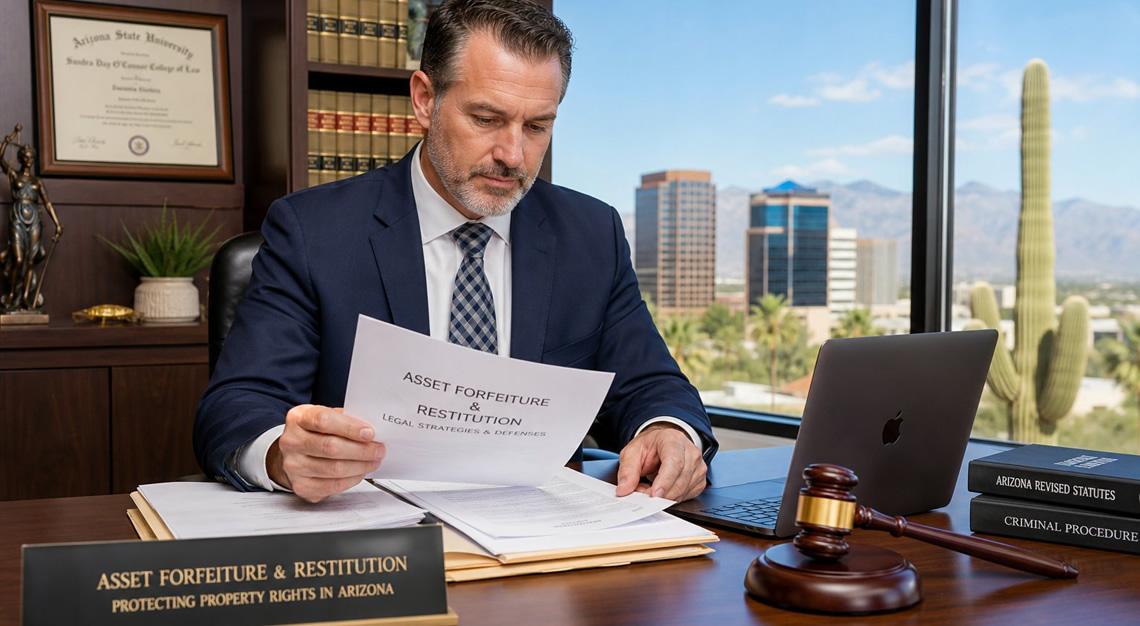
You are not without options when facing potential asset forfeiture. Taking early action can help protect your home, car, bank accounts, and savings from government seizure.
Keep Detailed Records
Build a complete paper trail that proves where your money and property came from. Save pay stubs, bank statements, purchase receipts, and ownership documents. This documentation helps show that your assets came from legal sources.
Use Smart Financial Habits
Once you suspect an investigation, change how you handle money. Use credit cards and bank transfers instead of cash when possible. Keep business money separate from personal funds. If you must deposit or withdraw large amounts of cash, keep paperwork that explains why. Never split deposits into smaller amounts to avoid bank reporting rules.
Work With Your Attorney
Your lawyer may be able to reach agreements with prosecutors to protect certain property. You might keep a car you need to get to work or access part of your bank account to pay for basic living costs and legal fees.
Question Excessive Seizures
Police sometimes take more property than they should. Your attorney can challenge seizures that go beyond what the law allows.
Time Your Actions Right
Deal with forfeiture issues before accepting any plea deal. Make sure your asset protection plan fits with your overall defense strategy. Think about whether state or federal court would work better for your situation. Plan for what might happen before trial and after any conviction.
Acting quickly and working with a lawyer who knows forfeiture law gives you the best chance to keep your property.
Common Questions About Property Seizure and Victim Compensation

Is it possible for law enforcement to take my assets before filing charges?
Law enforcement can seize your property even when no criminal charges exist yet. This happens through civil or administrative forfeiture processes. These actions require only probable cause and allegations of criminal connections.
You still have legal protections. Authorities must provide proper notice of the seizure. You can file claims to contest the action. You may demand a hearing to challenge their evidence.
Quick action matters. Contact a lawyer right away if you receive any notice about seized property.
How do existing loans affect forfeited property?
Banks and lenders hold special protected rights called lienholder interests. They can file their own claims during forfeiture cases to recover what they're owed.
Important points about your loans:
- You typically remain responsible for paying the full loan amount
- The government taking your property doesn't erase your debt
- You could lose the asset and still owe money
A lawyer can work with your lender to find solutions. Options might include supervised property sales that pay off the loan and reduce what you owe.
Can frozen money pay for my lawyer?
Courts often restrict access to seized funds for legal fees. This happens especially when authorities claim the money came from illegal activity.
Your lawyer can petition the court to release legitimate funds. They can challenge restrictions that prevent you from hiring proper legal help. The key is identifying clean money quickly.
You need to act fast to separate untainted assets from those under suspicion.
What is the typical duration for these cases?
Case length depends on the type of proceeding and whether you contest it.
Timeline differences:
|
Case Type |
Typical Duration |
|---|---|
|
Uncontested administrative forfeiture |
A few months |
|
Contested civil forfeiture |
One year or longer |
|
Criminal forfeiture |
Matches criminal case timeline |
|
Complex restitution matters |
Over one year |
Appeals can extend any process by several years. Each case varies based on its specific facts and complexity.
Getting Help from an Attorney

You should contact a criminal defense lawyer immediately after receiving a subpoena, search warrant, seizure notice, or target letter. Don't wait until formal charges appear. Early action matters.
Planning before an indictment can protect more of your property and give you better options. A lawyer can help you understand what assets might be at risk and how to defend them.
When to reach out:
- As soon as you receive any official notice
- Before charges are filed
- If property has already been taken
- When you think your business, home, or accounts might be targeted
If you're in Phoenix, Mesa, Chandler, Scottsdale, or elsewhere in Arizona, consider scheduling a consultation with a criminal defense team. Many lawyers offer free initial meetings to review your situation.
You should not handle an asset forfeiture by yourself. Call Arizona Criminal Lawyer Attorneys at Law at (602) 610-5019 to set up a private meeting about your case.


